DESCRIPTION
Real estate looks simple from the outside – buy a building, rent it out, collect the rent. In practice, every acquisition ties up capital for years, every property ages and needs maintenance, and rents, occupancy, interest rates and financing decide whether a portfolio creates value or destroys it. Anyone in a leadership role in the real estate industry – whether in asset or property management, acquisition, finance or controlling – needs to understand how these levers interact. Our Real Estate Simulation provides an immersive, risk-free environment to do exactly that: participants take over a real estate investment company and experience first-hand how their decisions affect occupancy, rental income, cash flow and the share price.
The simulation combines business acumen with enterprise thinking across functional boundaries. Which properties should we buy – residential or commercial, medium or large, in which location – and how much should we bid? How much equity do we invest and how much do we finance with mortgages? Which rents do we ask for, and how do we keep our properties attractive for tenants? When do we renovate, modernise or sell? Like every IndustryMasters business simulation, it is available as a competitive multi-player real-time event and as a self-guided single-player version.
The Real Estate Simulation can be tailored quickly to align the storyline, property types, KPIs, critical decisions and relevant lessons with your company and your markets. When only a custom solution will do, we have the experience and technology to build completely unique simulations. We work with you to ensure we have exactly the decisions and outcomes your learners need to understand.
THE REAL ESTATE BUSINESS MODEL
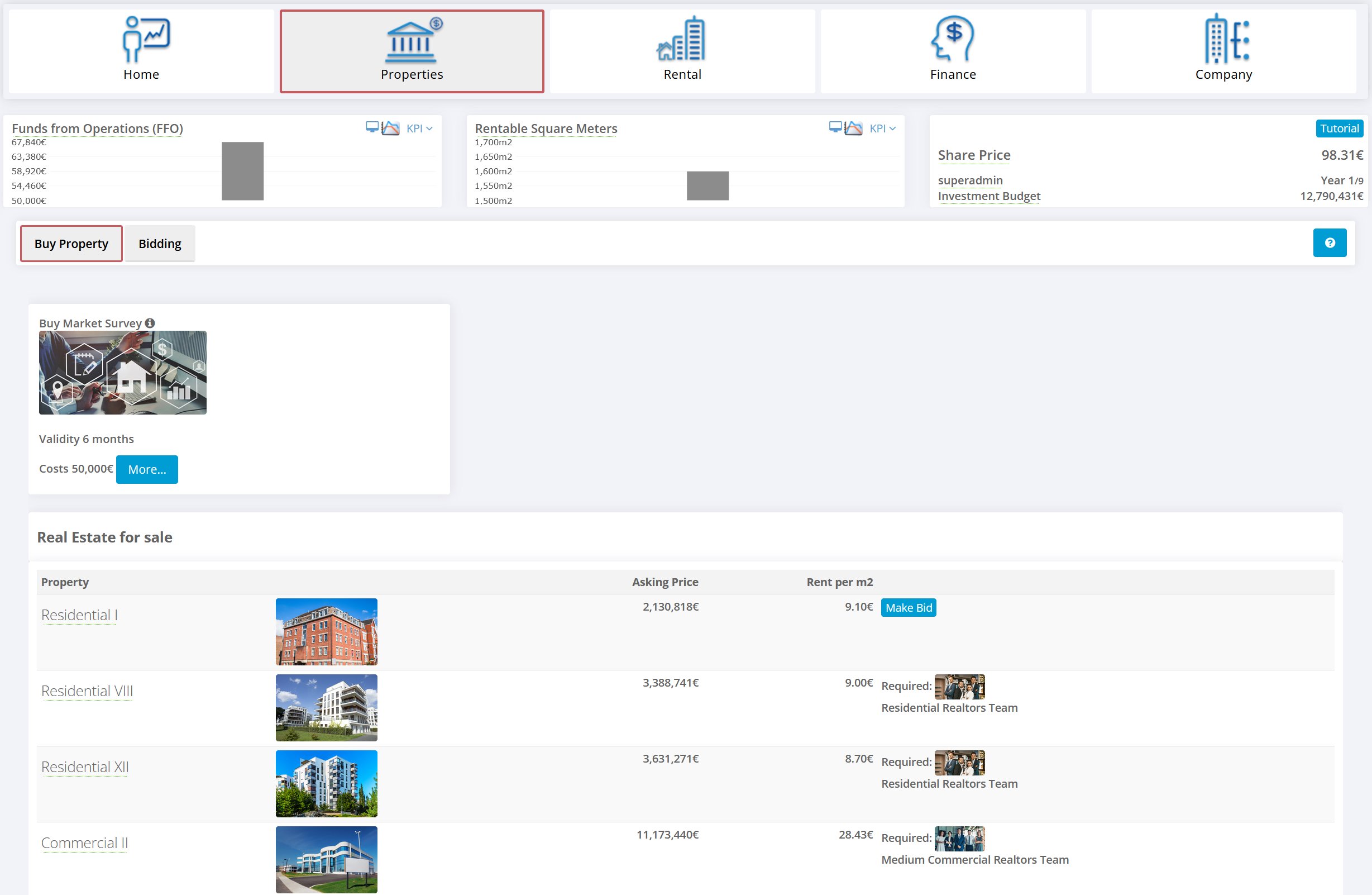
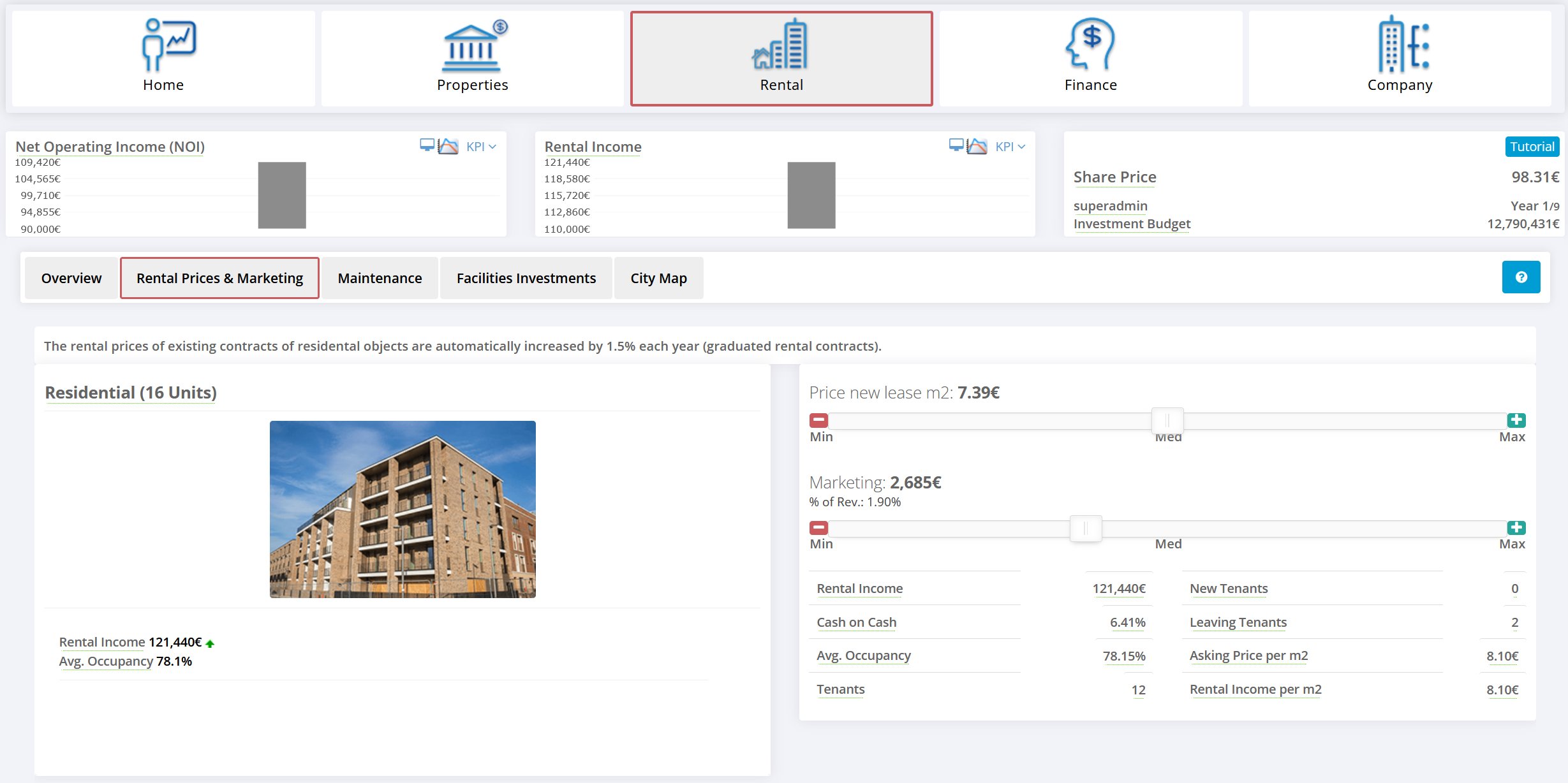
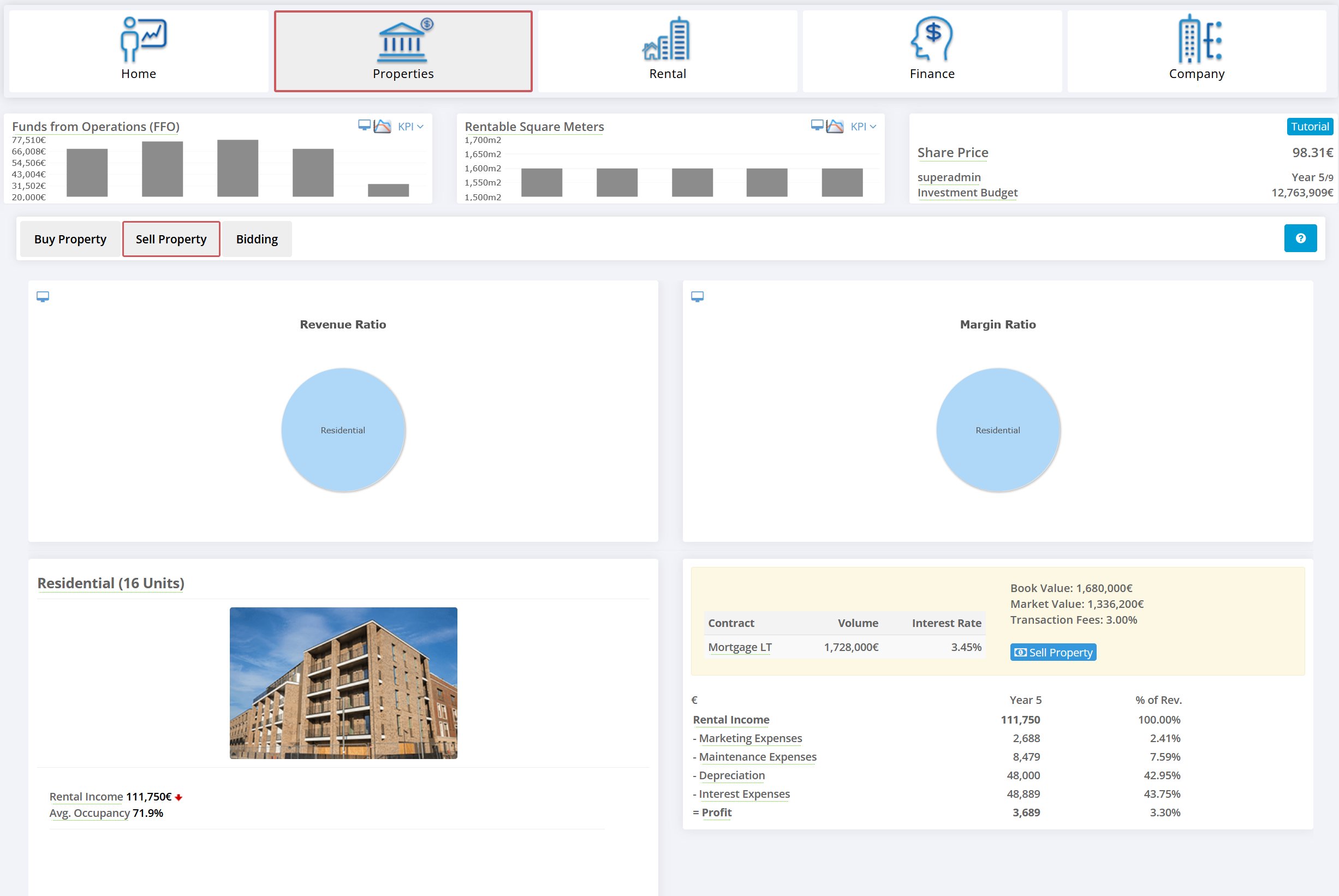
Participants lead a real estate investment company that starts with a single residential property, around 14 M€ in equity and about 12 M€ in cash ready to invest. Competing against rival real estate companies, they bid for residential and commercial properties, finance them with equity and mortgages, set rents and marketing budgets per property, decide on maintenance and on facility investments such as renovation, upgrades and energy efficiency, build realtors teams to access new segments – and sell properties when it pays off.
Along the way, they experience the typical trade-offs of the industry: growth through leverage versus financial stability, high rents versus occupancy, and maintenance spending today versus property value tomorrow. Real-world challenges such as storm and flood damage, the question of elementary insurance, and the need for financial and energy-efficiency expertise put their decisions to the test.
Topics
- Real estate business model and value creation
- Acquisition, bidding and portfolio strategy
- Residential versus commercial properties
- Location, condition and equipment of properties
- Rental pricing, marketing and occupancy
- Maintenance, renovation and energy efficiency
- Financing with equity and mortgages
- Risk management and insurance
- Talent, realtors teams and HR policies
- Finance — earnings, cash flow & returns
Key Performance Indicators (KPIs)
- Rentable Square Meters
- Rental Income
- Net Operating Income (NOI)
- Funds from Operations (FFO)
- Free Cash Flow
- Debt Ratio (LTV)
- Debt Service
- Return on Equity (ROE)
- Return on Invested Capital (ROIC)
- Share Price
Learning Objectives
- Understand how a real estate investment company creates value and generates income
- Portfolio decisions
- Residential and commercial properties of different sizes
- Location, condition and the right time to buy or sell
- Rent and marketing
- Setting rents for new leases
- Using marketing and realtors teams to fill vacant space
- Investments along the value chain
- Acquisition: market surveys and bidding for properties
- Facilities: maintenance, renovation, upgrades and energy efficiency grade A
- HR: flexible work schedules, parental leave, training and leadership development
- Management issues: realtors teams, elementary insurance and external experts
- Aligning financing, debt and liquidity with portfolio growth
- Balancing trade-offs: short-term results vs. long-term growth
- Understand the importance of talent management and employee engagement
- Think and act as an entrepreneur across functional boundaries